
Back Lift Surgery in Vizag: What to Know
October 22, 2026
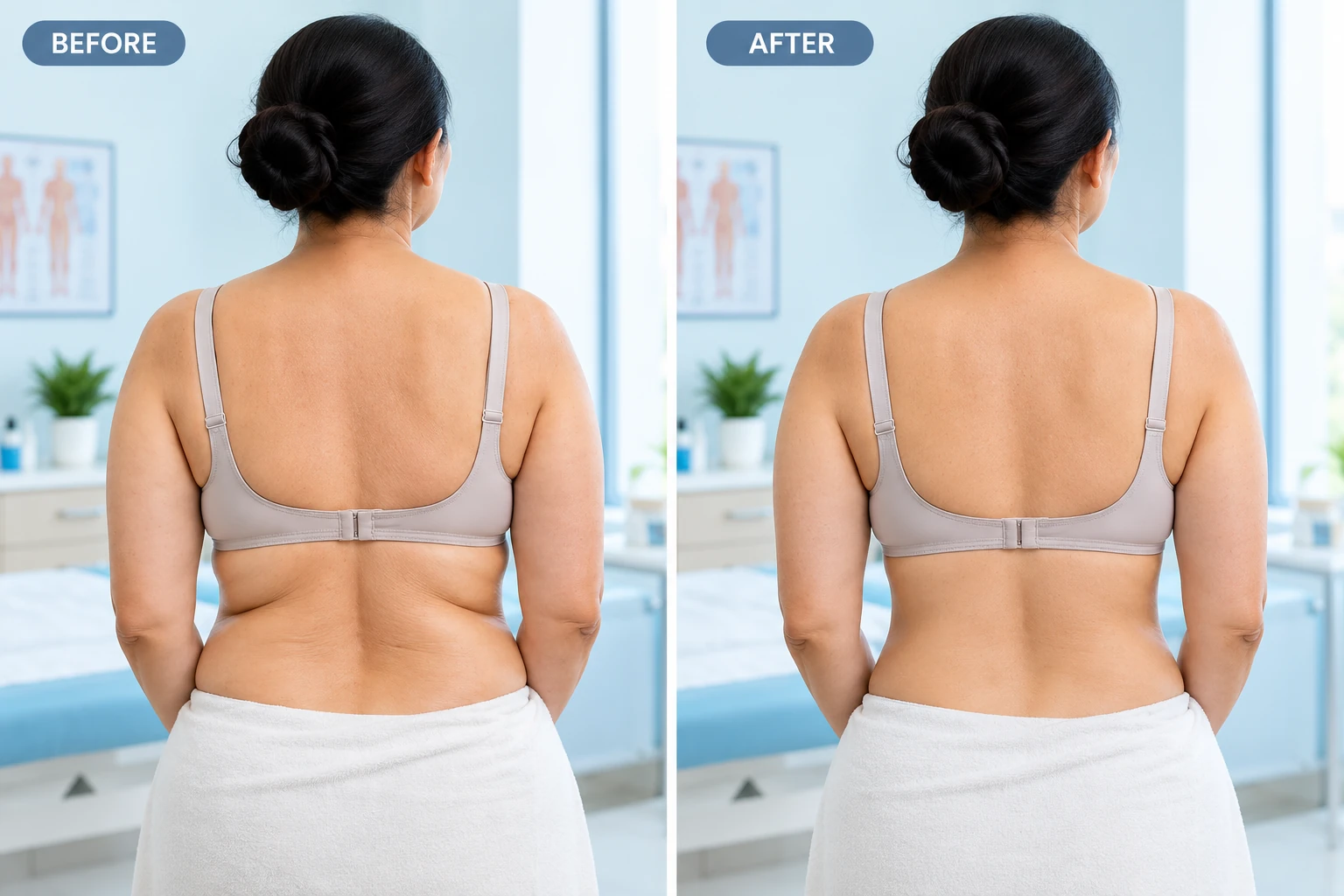
She had worked hard for it. Over two years, a 38-year-old schoolteacher lost close to 35 kilos through diet changes, daily walks, and a lot of determination. Her health reports improved and her knees stopped aching. But when she looked in the mirror, the change she felt inside didn't quite show. Folds of loose skin sat across her upper back and below her bra line. Blouses didn't sit right. In hot, humid weather the skin folds became itchy and sore.
She didn't feel vain for wanting to change it. She felt stuck.
If this sounds familiar, you are not alone. Many people reach a point where diet and exercise have done everything they can, and what remains is excess skin that simply won't tighten on its own. That is usually when they start reading about back lift surgery.
Back lift surgery is a well-established plastic surgery procedure. Over the last few decades, better surgical techniques, improved anaesthesia, and careful patient selection have made it a predictable and carefully planned option for the right candidate.
This guide walks you through what the procedure involves, who it suits, how to choose a qualified surgeon, what recovery really looks like, and the questions worth asking before you book.
Understanding the Need for Back Lift Surgery
A back lift (sometimes called an upper body lift or bra-line back lift) removes excess, sagging skin and some underlying fat from the back. It then tightens the remaining skin to create a smoother contour.
Why loose back skin happens
The most common reasons include:
- Significant weight loss, either through lifestyle changes or after bariatric (weight-loss) surgery. Skin that has been stretched for years often loses its elasticity.
- Ageing, as collagen and elastin (the proteins that keep skin firm) naturally decline.
- Genetics, which influence how well your skin bounces back.
- Pregnancy and hormonal changes, which can affect skin and fat distribution.
Signs it may be worth seeing a specialist
Loose skin is not a disease, and many people live with it comfortably. But consider a consultation if you notice:
- Skin rolls on the upper or lower back that don't change with exercise
- Rashes, redness, or infection in skin folds (doctors call this intertrigo)
- Difficulty finding clothes that fit comfortably
- Persistent discomfort from skin rubbing against bra straps or waistbands
- A noticeable effect on your confidence or day-to-day comfort
Why timing matters
Speaking to a plastic surgeon early doesn't mean committing to surgery. It means understanding your options. Skin-fold infections can be treated sooner, and you'll know whether your weight is stable enough for surgery or whether waiting a few months would give a better result.
What Makes Back Lift Surgery Effective and Trusted?
How the procedure works
In simple terms, the surgeon marks the area of loose skin while you are standing, then removes a measured strip of skin and fat during surgery. The remaining skin is lifted, tightened, and closed in layers.
For a bra-line back lift, the incision is typically placed horizontally where a bra strap sits, so the scar can be hidden under most clothing. Lower back lifts usually place the scar along the waistline or just above the buttocks.
Clinical background
Body contouring procedures like back lifts have been performed and refined for several decades, particularly as bariatric surgery became more common. Plastic surgery literature published on platforms such as PubMed describes body contouring after massive weight loss in detail, including techniques, outcomes, and complication rates. Based on clinical evidence, many patients report improved comfort, better clothing fit, and higher satisfaction with their body shape.
Modern advancements
To be honest about this: back lift surgery is not a robotic or laser procedure. It is a hands-on surgical operation. The advances lie elsewhere:
- Better pre-operative planning, including precise marking and photographs
- Layered closure techniques that place less tension on the skin and may help scars heal more neatly
- Combination with liposuction to refine contours around the incision
- Improved anaesthesia and pain control, including long-acting local anaesthetic blocks
- Clot-prevention protocols, such as early walking and compression devices
Why it is considered a reliable option
In most cases, when a patient is carefully selected, has a stable weight, and follows aftercare instructions, back lift surgery gives a lasting improvement in contour. The skin that is removed doesn't come back. However, future weight gain, ageing, and pregnancy can still change the result over time.
Why Patients Prefer to Book Back Lift Surgery Online
Many patients today begin their journey on their phone. Booking a consultation online brings some real advantages:
- Research at your own pace. You can read about surgeons, hospitals, and procedures before you ever step into a clinic.
- Teleconsultations for a first opinion. A video call lets you discuss your concerns and ask whether you might be a candidate, especially useful if you live outside the city.
- Compare credentials easily. You can check a surgeon's qualifications, specialisation, and hospital affiliations side by side.
- Read verified patient experiences. Reviews on trusted platforms give a sense of how a surgeon communicates and cares for patients.
- Simple scheduling and follow-ups. Appointment reminders and digital records make the process smoother.
- Access to second opinions. You can consult a specialist in another city before deciding.
One caution: an online consultation is a starting point. A plastic surgeon will always need to examine you in person before confirming that surgery is right for you.
Where to Find the Best Plastic Surgeon for Back Lift Surgery
Search results can be crowded with advertisements. A source that looks prominent isn't always the most credible. Here is where to look:
- Accredited hospitals. Look for NABH (National Accreditation Board for Hospitals & Healthcare Providers) or JCI (Joint Commission International) accreditation. These indicate the hospital meets defined safety and quality standards.
- Official doctor and hospital websites. These should list qualifications, registration details, and the procedures the surgeon performs.
- Verified health platforms. Established platforms like Practo and large hospital networks list doctors with verified credentials and patient reviews.
- Medical council registers. You can check a doctor's registration through the National Medical Commission (NMC) or the Andhra Pradesh Medical Council.
- Professional associations. Membership of the Association of Plastic Surgeons of India (APSI) or the Indian Association of Aesthetic Plastic Surgeons (IAAPS) suggests ongoing professional engagement.
- Referrals from your own doctor. Your family physician or bariatric surgeon often knows which plastic surgeons have good outcomes and communicate well.
If you are looking for back lift surgery in Vizag, choose a surgeon who operates at a well-equipped hospital in Visakhapatnam, with an ICU and emergency support on-site, rather than a stand-alone setup with limited backup.
How to Choose the Right Doctor or Surgeon for Back Lift Surgery
This is the most important decision you will make. The best plastic surgeon for back lift surgery isn't necessarily the most advertised one. It is the one whose training, experience, and approach fit your needs.
Qualifications
In India, a qualified plastic surgeon typically holds:
- MBBS (basic medical degree)
- MS in General Surgery (or equivalent)
- MCh or DNB in Plastic Surgery, which is the super-specialty qualification in plastic and reconstructive surgery
Additional fellowships in aesthetic or post-bariatric body contouring are a plus.
Specialisation and experience
Ask how often the surgeon performs body contouring procedures, specifically back lifts or upper body lifts. Surgical volume matters. Surgeons who perform a procedure regularly tend to be more familiar with planning, technique, and managing complications.
Hospital affiliation
Where will the surgery be done? A hospital with proper operating theatres, anaesthesia support, blood bank access, and an ICU provides an important safety net.
Peer recognition
Teaching roles, publications, conference presentations, and association memberships suggest a surgeon who stays updated.
Patient reviews
Look for patterns in reviews. Do patients mention clear explanations, respectful care, and good follow-up? A few mixed reviews are normal. Consistent concerns are worth noting.
Communication style
During your consultation, notice whether the surgeon:
- Listens to your goals before suggesting anything
- Explains risks as clearly as benefits
- Shows realistic before-and-after examples (shared with patient consent)
- Is comfortable with you taking time to decide
Seeking a second opinion
For any elective surgery, a second opinion is sensible. A confident, experienced surgeon will welcome it. It isn't a sign of distrust; it is a sign that you are making a thoughtful decision.
Different Types of Back Lift Surgery
Bra-line back lift (upper back lift)
The most common type. A horizontal incision along the bra line removes rolls of skin from the upper and mid back. This may suit patients whose main concern is loose skin across the upper back after weight loss.
Lower back lift
This addresses skin above the buttocks and around the waist. It is often done as part of a lower body lift or belt lipectomy, which also treats the abdomen, hips, and outer thighs.
Vertical back lift
Less common. A vertical incision runs along the side of the torso, sometimes combined with an arm lift. It may suit patients with skin excess that runs from the arms down the sides.
Liposuction alone
If your skin still has good elasticity and the concern is mainly fat, liposuction without skin removal may be enough. A surgeon will tell you honestly if a lift isn't needed.
Combined procedures
Many post-weight-loss patients combine a back lift with an arm lift (brachioplasty), tummy tuck (abdominoplasty), or breast surgery. Combining can reduce the number of anaesthesia sessions, but longer operations carry more risk, so this decision is made carefully and individually.
Day-care versus inpatient
Smaller procedures may sometimes be done as day-care. Most back lifts, especially combined ones, involve a hospital stay of one to two nights or more for monitoring and pain control.
Consultation formats and packages
- Teleconsultation for an initial opinion
- In-person consultation for examination and planning (always required before surgery)
- Packages may include consultation only, pre-operative tests, or a full surgical package covering surgery, hospital stay, garments, and follow-ups. Ask exactly what is included.
Elective, not urgent
A back lift is an elective procedure. There is no rush. You can take the time you need to prepare physically and mentally.
When Should You Consider Booking Back Lift Surgery?
You may be ready to book a consultation if:
- Your weight has been stable for at least 6–12 months
- If you had bariatric surgery, you are usually 12–18 months past it, as advised by your bariatric team
- You have recurrent rashes or infections in skin folds despite good hygiene
- Exercise and diet have improved your fitness but not your skin
- You are in good general health, with conditions like diabetes or blood pressure well controlled
- You are a non-smoker or ready to stop well before surgery
A second opinion is wise if you have been advised to combine several procedures at once, if your medical history is complex, or if you feel unsure about the plan.
And if you are still actively losing weight, a consultation is still useful. A surgeon can tell you when the timing will be right.
What to Expect: Before, During, and After Back Lift Surgery
Before surgery
- Consultation and examination. Your surgeon assesses your skin, weight history, and goals, and explains which approach fits.
- Tests. Typically blood tests, an ECG, and other checks depending on your age and health.
- Medication review. Some medicines, including blood thinners and certain supplements, may need to be paused.
- Stop smoking. Usually at least 4–6 weeks before surgery, because smoking significantly slows wound healing.
- Plan your support. Arrange help at home for the first week or two.
On the day
- Back lift surgery is usually done under general anaesthesia, so you are asleep throughout.
- The procedure often takes two to four hours, longer if combined with other surgery.
- Small drains may be placed to collect fluid, and you'll wake up wearing a compression garment.
Recovery
- First few days: Soreness and tightness are expected and managed with medication. Gentle walking starts early to help circulation.
- First two weeks: Drains are usually removed. Many people return to light desk work around two weeks.
- Four to six weeks: Most patients gradually return to exercise and lifting, as advised by the surgeon.
- Scars: They will look red at first and generally fade over 12–18 months. Scar care may include silicone gels and sun protection.
- Follow-ups: Regular visits let your surgeon check healing and address concerns early.
Risks, explained honestly
Every surgery carries some risk. With back lift surgery, these can include:
- Seroma (fluid collection under the skin), which may need draining
- Wound healing problems, especially at points of tension
- Infection
- Visible or widened scars
- Asymmetry or minor contour irregularities
- Numbness around the incision, which often improves with time
- Blood clots in the legs (DVT), which is why early walking and preventive measures matter
- Occasionally, the need for a revision procedure
Your surgeon should discuss each of these openly and explain what steps are taken to reduce them.
Realistic results
Many patients notice a smoother back contour soon after surgery, though swelling hides the final result for several months. Clothes often fit more comfortably, and skin-fold irritation usually settles. The goal is improvement, not perfection, and a good surgeon will set those expectations clearly.
Tips Before You Book Back Lift Surgery Online
- Verify registration with the NMC or the state medical council.
- Check hospital accreditation such as NABH or JCI.
- Ask about specific experience with back lifts and post-weight-loss body contouring.
- Bring your records, including weight-loss history, bariatric surgery details, and current medicines.
- Prepare questions in advance. Write them down so you don't forget them in the moment.
- Understand the full cost including surgeon fees, anaesthesia, hospital stay, garments, and follow-ups. Ask for a written estimate.
- Ask about aftercare, including who to call if you have concerns at night or on a weekend.
- Consider a second opinion before committing.
Common Mistakes Patients Should Avoid
- Choosing purely on price or discounts. Lower cost sometimes means fewer safety measures or less experienced hands.
- Having surgery before your weight is stable. Further weight loss can loosen the skin again and affect the result.
- Relying on internet self-diagnosis. Only an examination can tell you which procedure suits your body.
- Overlooking qualifications. Make sure your surgeon is a trained plastic surgeon, not someone without super-specialty training.
- Not sharing your full medical history. Conditions and medicines you don't mention can affect your safety.
- Skipping follow-ups. Early check-ups help catch minor issues before they become bigger ones.
- Choosing a facility without emergency backup. Rare complications need prompt access to an ICU and specialist support.
Why Booking Back Lift Surgery with a Trusted Specialist Is a Smart Decision
When you choose an experienced, qualified plastic surgeon working in an accredited hospital, you gain:
- Specialised expertise in body contouring and safe surgical planning
- Modern infrastructure with anaesthesia, monitoring, and emergency support
- Structured care before and after surgery, from pre-op tests to scar management
- Transparent costs and clear guidance on what's included
- Peace of mind for you and your family
You don't have to have all the answers before you reach out. A consultation is simply a conversation, a chance to ask questions, understand your options, and decide in your own time. If you're considering back lift surgery in Vizag, booking a consultation or requesting a second opinion is a calm, sensible first step.
Final Thoughts
Loose skin after weight loss or with age is common, and wanting to address it is a reasonable choice about your comfort and wellbeing. If skin folds are causing irritation or affecting how you feel day to day, it's worth getting a professional opinion rather than putting it off indefinitely.
Back lift surgery is a well-established procedure, and for the right candidate it can bring a meaningful improvement in contour and comfort. The key is choosing a qualified, experienced plastic surgeon who explains the benefits and risks honestly and plans the procedure around your health, goals, and timing.
Take your time. Ask your questions. Get a second opinion if it helps you feel sure. When you're ready, book a consultation to discuss whether back lift surgery is right for you. You deserve a decision made with clarity and confidence.
This article is for informational purposes only and is not a substitute for professional medical advice. Please consult a qualified doctor for diagnosis and treatment decisions specific to your condition.
Frequently Asked Questions
Is back lift surgery safe? What are the risks?
Back lift surgery is generally considered safe when performed by a qualified plastic surgeon in an accredited hospital on a well-selected patient. Risks include fluid collection, wound healing problems, infection, scarring, numbness, and blood clots. Your surgeon will explain how these are minimised in your case.
How long is the recovery period after back lift surgery?
Most patients return to light desk work in about two weeks and gradually resume exercise around four to six weeks. Swelling settles over several months, and scars continue to fade for up to 12–18 months.
How much does back lift surgery cost in Vizag?
Cost depends on the extent of surgery, whether it's combined with other procedures, the hospital, anaesthesia, and length of stay. The most reliable way to know is a consultation, after which you should receive a written, itemised estimate.
Does insurance cover back lift surgery?
In India, back lift surgery is usually considered cosmetic and is generally not covered by health insurance. Coverage policies vary, so it's best to check with your insurer and discuss the documentation with your surgeon.
Is back lift surgery painful?
You'll be under general anaesthesia during the procedure. Afterwards, soreness and tightness are expected for the first several days and are managed with prescribed pain relief. Most patients find the discomfort steadily improves within the first week or two.
How do I choose the right doctor for back lift surgery?
Look for a plastic surgeon with MCh or DNB in Plastic Surgery, valid NMC or state council registration, experience in body contouring, affiliation with an accredited hospital, and a communication style that leaves you feeling informed rather than rushed.
Can I get a second opinion online?
Yes. Many plastic surgeons offer teleconsultations for an initial opinion or second opinion. An in-person examination will still be needed before surgery is confirmed.