Best Rhinoplasty Surgeon in India
July 24, 2026
Best Rhinoplasty Surgeon in India: A Patient's Complete Guide to Nose Surgery (2026)
Medically reviewed by Dr. Bhavya Sree, MBBS, MS (Gen. Surgery), M.Ch Plastic Surgery (NIMS Hyderabad), FAM · FAS (Ghent, Belgium) — Consultant Plastic Surgeon, Visakhapatnam. About Dr. Bhavya →
Most people who come to me about their nose have been thinking about it for years — sometimes since school. A dorsal hump they photoshop out of every picture. A bulbous tip they've learned to angle away from cameras. A deviated septum that has quietly blocked one nostril for a decade. Or an old sports injury that never healed the way it should have.
Rhinoplasty — commonly known as a nose job — is one of the most requested aesthetic and functional surgeries in the world, and it is also one of the most technically demanding. That is why choosing the right surgeon matters so much. The difference between a natural, harmonious result and a nose that looks "operated on" is almost always the surgeon, not the technique.
This guide is written for patients — not for other doctors. I'll walk you through what rhinoplasty actually is, how to think about finding the best rhinoplasty surgeon in India for your case, what different types of nose surgery involve, what to realistically expect before and after, and the practical questions to ask before you book anything.
— Dr. Bhavya Sree, Consultant Plastic Surgeon, VisakhapatnamWhy So Many People Are Now Considering Rhinoplasty
The nose sits at the visual centre of the face. Even a small change — softening a hump, refining a wide tip, straightening a crooked bridge — can transform how balanced the face looks, without ever making it obvious that surgery has been done. Done well, no one should be able to tell you had rhinoplasty. They should just think you look rested, symmetrical, and like yourself.
The reasons my patients come in are broadly three:
Aesthetic concerns. A prominent dorsal hump, a drooping tip, a wide or bulbous tip, a nose that seems too long or too short for the face, or asymmetry after an old injury. These patients are not chasing a stranger's nose from a magazine — good candidates want their own features refined, not replaced.
Functional problems. A deviated nasal septum, collapsed valves, or turbinate hypertrophy that causes chronic congestion, poor sleep, snoring, or reduced exercise tolerance. Many patients come in for cosmetic reshaping and only realise during examination how much their breathing has been compromised.
Trauma or previous surgery. Fractures from sports, accidents, or falls that healed with a bump or a shift, and revision cases where a previous rhinoplasty (often done years ago) didn't deliver a natural result.
You don't need to fit neatly into one category. The most common consultation in my clinic combines all three — someone who wants to look better and breathe better, and this is exactly what modern functional-cosmetic rhinoplasty is designed to do.
What Actually Makes Rhinoplasty Effective — And How the Field Has Advanced
Rhinoplasty has been performed for over a century, but the last twenty years have transformed it. Older techniques focused on removing tissue: shaving down the hump, trimming cartilage, breaking and narrowing the bones. The problem was that noses done this way often collapsed with time — the tip drooped, breathing worsened, and the nose looked pinched.
Modern rhinoplasty is a structural operation. Rather than only removing, the surgeon reshapes and reinforces the underlying framework using precise cartilage work — often with cartilage grafts taken from the septum itself — so that the nose maintains its shape and breathing function decades later. This shift is why patient satisfaction has improved so much, and why the best rhinoplasty surgeon in India for your case will almost always be a plastic surgeon with formal training in these structural techniques, not simply someone who "does noses."
Key advancements you should know about as a patient:
- Preservation rhinoplasty, where the natural dorsal aesthetic lines are preserved rather than broken and rebuilt — leading to smoother, more natural results with faster recovery.
- Ultrasonic bone reshaping (piezo rhinoplasty), which uses ultrasonic instruments instead of chisels to sculpt bone with far less bruising and swelling.
- Structural cartilage grafting, which supports the tip and prevents the "collapsed, over-operated" look that used to be common.
- Combined functional-cosmetic surgery, where septal correction and valve support are done in the same operation as aesthetic reshaping.
None of these are marketing terms in my clinic — they are the standard techniques taught in serious plastic surgery training programmes. The reason to mention them here is so that when you speak to a surgeon, you know the language they should be fluent in.
Why Patients Now Prefer to Research and Book Online
A generation ago, choosing a surgeon meant asking your family doctor for a name and going. Today, patients research thoroughly — and honestly, they should. Rhinoplasty is not a small decision.
Booking a consultation online now offers real advantages:
- You can read a surgeon's credentials in detail before you meet them.
- You can look at genuine before-and-after galleries — the surgeon's own patients, not stock images — and see if their aesthetic sense matches yours.
- A short teleconsultation for a first opinion is easy to schedule from another city, saving a full travel day for a case that may not even need in-person examination yet.
- You can compare surgeon profiles, hospital affiliations, and patient reviews in a way that simply wasn't possible before.
- Follow-up visits after surgery can often be done over video, which matters if you've travelled for the procedure.
At the same time, be careful: the loudest online voice is not always the best surgeon. Slick websites and paid ads are not credentials. In the next section, I'll go through what actually is.
Where to Look for the Best Rhinoplasty Surgeon in India
For a procedure this specialised, focus your search on credible sources rather than general listings.
Accredited hospitals. Hospitals with NABH (National Accreditation Board for Hospitals) accreditation follow structured safety and infection-control protocols. For surgery, this backup matters far more than most patients realise.
Professional bodies. The Association of Plastic Surgeons of India (APSI) and the Indian Association of Aesthetic Plastic Surgeons (IAAPS) maintain member directories of formally trained plastic surgeons. Membership is a good baseline filter.
The NMC (National Medical Commission) register. Every practising doctor in India must be registered with a state medical council under the NMC. A quick check confirms the surgeon's qualifications are what they claim.
Official surgeon and clinic websites. Look for detailed credential pages, real photographs, procedure descriptions written in plain language (not marketing copy), and a proper gallery of the surgeon's own results.
Referrals from your GP or ENT specialist. If your primary concern is functional (breathing, sinus), your ENT will often know which plastic surgeons in your region collaborate well on combined cases.
For patients specifically searching for nose surgery in Visakhapatnam or elsewhere in Andhra Pradesh, our practice is one of a small number of dedicated plastic-surgery clinics offering both aesthetic and functional rhinoplasty in the region — you can review credentials, results, and patient stories at drbhavyaplasticsurgery.com before deciding to consult.
How to Choose the Right Rhinoplasty Surgeon — What Actually Matters
This is the section I would want my own family member to read. When you're deciding on a surgeon for nose surgery in India, the following genuinely matters. Everything else is noise.
1. Formal plastic surgery qualification. The gold-standard postgraduate qualifications for plastic surgery in India are M.Ch (Plastic Surgery) or DNB (Plastic Surgery), awarded after 3 years of super-specialty training following MS in General Surgery. A general practitioner or dermatologist offering rhinoplasty is not equivalent, however experienced they claim to be. Ask directly what qualification the surgeon holds and where they were awarded.
2. Training in the specific procedure. Plastic surgery is broad — burns, hand, breast, craniofacial, aesthetic. Ask specifically about rhinoplasty training and fellowships. My own aesthetic fellowship in Ghent, Belgium was under Dr. Patrick Tonnard and Dr. Alexis Verpaele, two of the world's most respected aesthetic surgeons, focused on minimal-scar and preservation techniques. Fellowships don't have to be international, but focused post-qualification training in aesthetic surgery matters.
3. Volume of similar procedures. For rhinoplasty especially, surgical volume correlates with outcomes. Ask how often the surgeon performs rhinoplasty — weekly, monthly, occasionally. There is a real difference between a surgeon who does 4 noses a month and one who does 4 a year.
4. Real before-and-after gallery. Ask to see the surgeon's own results, ideally across a range of nose shapes and skin types similar to yours. Notice whether results look natural or stamped-out-of-a-catalogue. A good surgeon's noses look different — because every face is different.
5. Peer recognition and continued learning. Membership in APSI, IAAPS, and attendance at national and international meetings (ISAPS, BRASCON, APSICON) suggests a surgeon who keeps learning. So does academic teaching involvement.
6. Honest communication style. Notice how the surgeon speaks with you in consultation. Do they take a proper history? Examine you carefully? Explain why they are recommending what they are recommending? Push back if your expectations are unrealistic? Or do they simply agree to whatever you request and hand you a quote? The former is what you want. Always.
7. A word about second opinions. Getting a second opinion before rhinoplasty is a sign of a careful patient — never a sign of distrust. Any good surgeon will encourage it. If a surgeon reacts defensively when you mention seeing someone else, treat that as information.
The Different Types of Rhinoplasty — In Patient-Friendly Terms
Open rhinoplasty. A tiny incision is made across the columella (the strip of skin between the nostrils), allowing the surgeon full visibility to reshape the tip and structural framework precisely. The scar fades to near-invisible in most patients. This is the standard approach for most tip work, revision cases, and complex reshaping.
Closed rhinoplasty. All incisions are inside the nostrils, with no external scar. It is well-suited to more limited reshaping — for example, isolated dorsal hump reduction — where full exposure of the tip is not needed.
Preservation rhinoplasty. A newer approach that preserves the natural dorsal aesthetic lines and reshapes the underlying bone and cartilage from below, rather than removing and rebuilding. Recovery tends to be smoother in appropriately selected patients.
Ultrasonic (piezo) rhinoplasty. Ultrasonic instruments are used to sculpt bone more precisely and with much less soft-tissue trauma than traditional osteotomes, meaning less bruising and often faster visible recovery.
Functional / septorhinoplasty. Combines cosmetic reshaping with correction of a deviated septum, valve collapse, or turbinate enlargement — improving breathing and appearance in one operation. Health insurance coverage may apply to the functional component in eligible cases.
Revision rhinoplasty. Correction of a previous rhinoplasty that healed poorly, over-resected, or lost structural support with time. These are among the most challenging cases in plastic surgery and should only be undertaken by surgeons with specific revision experience.
Ethnic and preservation-focused rhinoplasty for Indian noses. Many Indian patients have thicker skin, broader tips, and different underlying cartilage than the Caucasian noses that older textbooks were written for. Modern practice — including how I plan rhinoplasty in Visakhapatnam for Indian and South-Asian patients — is to enhance the existing structure with grafts and tip refinement rather than aggressive reduction, which preserves ethnic identity and gives longer-lasting results.
When Should You Actually Consider Booking a Rhinoplasty Consultation?
Consider a consultation if any of the following applies:
- You have been aware of a specific cosmetic concern about your nose for at least a year, and it affects your confidence in daily situations.
- You have persistent nasal blockage, snoring, mouth breathing at night, or reduced exercise tolerance that hasn't improved with medication.
- You had a nose injury that healed with a bump, shift, or breathing change.
- You are a young adult (generally 17+ for females, 18+ for males) whose facial growth is complete.
- You had a previous rhinoplasty and are unhappy with the result or have developed breathing issues.
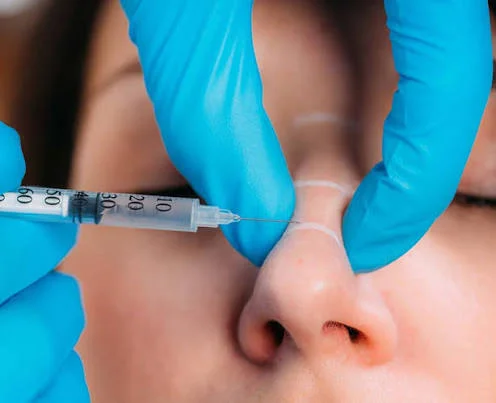
A consultation does not commit you to surgery. Its purpose is clarity — an honest assessment of what is bothering you, whether surgery is actually the right answer, and if so, what would be involved. In many cases I see, the answer is that a small change would achieve what the patient wants; occasionally the answer is that no surgery is needed at all; sometimes the answer is a non-surgical option like a filler for very minor irregularities. All of these are valid outcomes of a good consultation.
What to Expect: Before, During, and After Rhinoplasty
Before surgery. Your first consultation includes a detailed history, examination of both external appearance and internal breathing anatomy, high-resolution photographs from multiple angles, and often digital morphing so we can discuss realistic goals together. Blood tests, ECG, and — where relevant — a CT scan of the nose are arranged. Blood thinners and certain supplements are stopped 2 weeks before surgery. Smoking must stop at least 4 weeks before and remain stopped through recovery, as it significantly increases complication risk.
On the day of surgery. Rhinoplasty is performed under general anaesthesia and typically takes 2 to 4 hours depending on complexity. Most primary rhinoplasty patients go home the same day or after one night's stay. You'll wake with a small external splint, and dissolvable internal stitches. Nasal packing is not routinely used in most modern cases.
The first week. Bruising and swelling around the eyes peak on days 2-3 and then improve steadily. Pain is usually mild and controlled with routine paracetamol and short-course medication. Most patients feel presentable to leave the house by day 7-10, when the splint comes off.
Weeks 2-6. The external splint is removed at around day 7. Bruising fades. Most patients return to office work at 10-14 days and light exercise at 3 weeks. Contact sports, heavy lifting, and swimming wait until 6 weeks. Glasses need to be avoided or supported for 6 weeks to protect the healing bones.
3 to 12 months. Swelling continues to resolve — this is the part most patients underestimate. About 80% of swelling settles by 6 weeks, but the final refined appearance of the tip develops over 6-12 months as the last residual swelling fades and the tissues fully redrape. Patience during this period is important.
Realistic outcomes. In appropriately selected patients with realistic goals, rhinoplasty delivers lasting improvement in both appearance and — where relevant — breathing. It is not a guaranteed result, and every surgery carries some risk of complications including bleeding, infection, asymmetry, need for minor revision, or breathing changes. These are honestly discussed before you decide.
Practical Tips Before You Book Rhinoplasty
- Verify NMC registration through your state medical council's online portal.
- Check NABH accreditation of the hospital or day-care facility where surgery will be performed.
- Ask specifically how many rhinoplasties the surgeon performs per year.
- Bring your medical records and a full list of medications and supplements to consultation.
- Ask about total cost — surgeon's fee, anaesthesia, facility, tests, garment/splint, follow-ups — in writing, before agreeing to surgery.
- Ask about EMI and insurance where applicable, especially if a functional component is involved.
- Ask about the revision policy — a professional practice will have a clear stated approach if a minor touch-up becomes necessary.
- Consider a second opinion for major or revision cases. Any surgeon worth their qualifications will respect this.
Common Mistakes Patients Make — And How to Avoid Them
- Choosing purely on price. Rhinoplasty done cheaply and poorly costs far more to correct than it did to have.
- Choosing on Instagram aesthetics rather than credentials.
- Assuming a dermatologist or general practitioner offering rhinoplasty is equivalent to a plastic surgeon.
- Bringing a celebrity's photo and asking to look "exactly like this." A good surgeon will explain what your anatomy will and won't allow.
- Hiding medications, supplements, or previous surgeries during history — this genuinely affects safety.
- Skipping follow-up appointments once they are feeling better.
- Restarting smoking during recovery.
Why Booking with a Trusted Specialist Is Worth It
The right surgeon gives you more than a technique. You get a proper structured plan, a fully accredited facility with emergency support if it is ever needed, honest counselling that respects your autonomy, and a clear pathway of pre-operative preparation and post-operative care. You get someone who takes responsibility for your outcome, not someone who performs the procedure and disappears. And crucially, you get peace of mind — for yourself and your family — during a genuinely important decision.
If you are researching the best rhinoplasty surgeon in India for your specific case, look for those elements: formal M.Ch or DNB plastic surgery training, focused aesthetic fellowship, real results, an accredited setting, and honest, unhurried counselling. Meet at least one surgeon in person before you decide. And take the time you need — rhinoplasty is not a decision to rush.
A Note on Our Practice in Visakhapatnam
Our clinic in Visakhapatnam offers both aesthetic and functional rhinoplasty for patients from across Andhra Pradesh, Telangana, Odisha, and increasingly from Bengaluru, Hyderabad, Chennai, and abroad. Patients choose us for a combination of formal credentials (M.Ch from NIMS Hyderabad, international aesthetic fellowship in Ghent, Belgium, 15+ years of surgical experience, and 2000+ successful procedures), a dedicated aesthetic focus, and honest counselling — including telling patients when surgery is not the right answer for them.
You can review real patient outcomes in our before & after gallery, watch full patient journeys on our YouTube channel, and read more about our full range of facial and body procedures before deciding to consult.
Conclusion
A nose you have been thinking about for years deserves a decision made carefully, not quickly. Rhinoplasty today is safer, more refined, and more predictable than it has ever been — but only in the right hands. Take the time to verify credentials, review real results, meet the surgeon in person if you can, and ask every question you have on your mind.
If you're comparing options for the best rhinoplasty surgeon in India, don't judge by whoever's marketing is loudest. Judge by qualifications, focused training, honest counselling, and results you can see with your own eyes. Whether you choose our clinic or someone else's, please choose a surgeon who will treat your face — and your trust — with the care it deserves.
This article is for educational purposes only and is not a substitute for professional medical advice. Please consult a qualified plastic surgeon for a diagnosis and treatment plan specific to your condition.
Ready for a Confidential Consultation?
Whether you'd like a full in-person consultation, a second opinion on a previous rhinoplasty, or a short teleconsultation to discuss whether surgery is right for you, we're happy to help.
📞 Call: +91 98516 51234
💬 WhatsApp: Message us directly
Clinic: Health City, Arilova, Chinagadila, Visakhapatnam. Consultation hours: Mon–Sat, 9:00 AM – 4:00 PM. All consultations are private and unhurried.
Frequently Asked Questions
Is rhinoplasty safe? What are the main risks?
In the hands of a formally trained plastic surgeon operating in an accredited facility, rhinoplasty has a well-established safety profile. Like any surgery, it carries risks — bleeding, infection, asymmetry, prolonged swelling, breathing changes, or the possibility of a minor revision. Your surgeon should discuss these openly before you decide.
How long is the recovery after rhinoplasty?
Most patients return to office work at 10-14 days and light exercise at 3 weeks. Contact sports and heavy lifting wait until 6 weeks. Around 80% of swelling settles by 6 weeks, and the final refined shape emerges gradually over 6-12 months.
How much does rhinoplasty cost in India?
Rhinoplasty in India typically ranges from ₹80,000 to ₹3,50,000 depending on the complexity of the case (primary vs revision, cosmetic-only vs combined functional), the surgeon's training and experience, and the hospital's accreditation. An exact written estimate is always given after clinical examination. Nose surgery in Visakhapatnam and other tier-2 cities is often 20-30% more affordable than Mumbai, Delhi, or Bangalore for comparable surgical standards.
Does insurance cover rhinoplasty?
Purely cosmetic rhinoplasty is usually excluded, but the functional component — septoplasty, valve correction, correction of post-traumatic deformity — can often be partially covered when medical necessity is documented. Your surgeon can help provide the clinical documentation your insurer requires.
Is rhinoplasty painful?
The procedure itself is painless under general anaesthesia. Post-operative discomfort is usually mild and well controlled with routine pain medication. Most patients describe the first week as feeling congested and bruised rather than painful.
How do I choose the right rhinoplasty surgeon?
Look for formal plastic surgery qualification (M.Ch or DNB), focused aesthetic fellowship training, high rhinoplasty volume, a genuine before-and-after gallery, membership in APSI or IAAPS, an accredited hospital or day-care facility, and honest, unhurried counselling. Meet the surgeon in person before deciding.
Can I get a second opinion online before booking?
Yes. A short teleconsultation with clear front, side, and 45° photographs is enough for most first opinions, and it's a sensible way to compare surgeons before committing to travel. Any good surgeon will encourage a second opinion, not discourage one.
How soon should I book a consultation if I have a breathing problem or persistent congestion?
Chronic nasal obstruction that hasn't improved with 4-6 weeks of medical treatment deserves a proper examination. It's often a septal or valve issue rather than allergies alone, and both can be corrected — often at the same time as any cosmetic reshaping you may want.