
Gynecomastia Surgery in Vizag
July 21, 2026
Gynecomastia Surgery in Visakhapatnam: Definition, Procedure, Recovery & Results
Introduction
If you've ever felt uncomfortable taking off your shirt at the beach, avoided fitted t-shirts, or slouched forward in photos to hide your chest, you're not alone. A lot of men quietly deal with enlarged chest tissue for years before they even learn there's a name for it: gynecomastia.
Gynecomastia usually shows up because of excess glandular tissue, stubborn fat, or a mix of both. It's incredibly common during puberty, but plenty of adult men develop it too, often due to hormonal shifts, certain medications, weight gain, or underlying health issues. The frustrating part? No matter how many push-ups you do or how clean your diet gets, true glandular tissue rarely goes away on its own.
That's where gynecomastia surgery comes in. When workouts and lifestyle changes stop making a difference, surgery offers a permanent way to flatten and reshape the chest. If you've been searching for gynecomastia surgery near me or looking into options for gynecomastia surgery in Visakhapatnam, this guide will walk you through everything you need to know — what the condition actually is, how the procedure works, what recovery looks like, and the kind of results you can realistically expect.
What is Gynecomastia?
Gynecomastia is the medical term for the enlargement of male breast tissue. It happens when the balance between estrogen and testosterone gets thrown off, causing glandular tissue in the chest to grow. It can affect one side or both, and for many men, it comes with physical tenderness as well as a hit to self-confidence.
Here's an important distinction: not every enlarged chest is true gynecomastia. Some men have what's called pseudo-gynecomastia, which is simply an accumulation of chest fat with no extra glandular tissue involved. That kind can sometimes improve with weight loss. True gynecomastia, on the other hand, involves actual gland growth — and that's why gynecomastia treatment through surgery is often the most reliable long-term fix.
Common Causes of Gynecomastia
There isn't one single cause. In fact, a good gynecomastia doctor will usually spend time figuring out what's driving it before recommending anything. Some of the most common triggers include:
- Hormonal imbalance between estrogen and testosterone
- Puberty-related hormonal shifts
- Obesity or significant weight fluctuations
- Certain prescription medications
- Anabolic steroid use
- Liver or kidney disorders
- Thyroid conditions
- Aging and natural drops in testosterone
A consultation with a qualified plastic surgeon can help pinpoint the reason and match you with the right treatment plan — sometimes that's surgery, sometimes it's a medical evaluation first.
Who is a Good Candidate for Male Breast Reduction Surgery?
You may be a strong candidate for male breast reduction surgery if you:
- Have enlarged chest tissue that hasn't responded to exercise or dieting
- Are in generally good physical health
- Maintain a stable body weight
- Are a non-smoker or willing to stop before and after surgery
- Have realistic expectations about what surgery can do
- Feel self-conscious or emotionally affected by the appearance of your chest
Age matters less than overall health. Men in their late teens, thirties, forties, and even fifties all get this procedure and do well.
How Gynecomastia Surgery Actually Works
There isn't a one-size-fits-all approach. The right technique depends on how much glandular tissue you have, how much fat is in the area, and the condition of your skin. Most gyno surgery falls into one of three approaches:
1. Liposuction
If the enlargement is mostly from fatty tissue, liposuction alone can work well. The surgeon makes tiny incisions and gently suctions out the excess fat, leaving minimal scarring.
2. Gland Excision
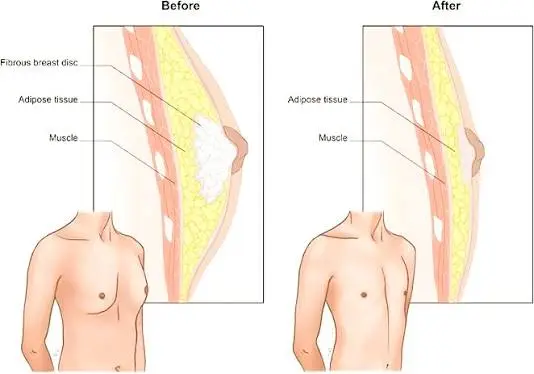
Firm glandular tissue can't be broken up by liposuction — it has to be surgically removed. This is done through a small incision, usually placed along the edge of the areola so the scar blends in naturally.
3. Combination Technique
Honestly, most patients need a bit of both. Combining liposuction and gland excision gives the most natural, sculpted result — a chest that looks flat and masculine rather than "carved out" or uneven.
The surgery is typically done under anesthesia and takes a couple of hours. In most cases, you'll head home the same day.
Gynecomastia Recovery: What to Expect
Everyone heals a little differently, but here's a realistic look at what gynecomastia recovery generally involves:
- First few days: Some swelling, bruising, and mild soreness. Most men describe it as tightness rather than sharp pain.
- Compression garment: You'll wear one for a few weeks. It feels a bit like a snug undershirt and does a lot of the heavy lifting for reducing swelling and helping the skin retract.
- Back to desk work: Many patients return to office jobs within 3 to 7 days.
- Exercise: Light walking is encouraged early on, but hold off on chest workouts and heavy lifting for around 4 to 6 weeks.
- Full results: The chest keeps refining over the next few months as swelling settles and the skin adjusts.
The single biggest factor in a smooth recovery? Following your surgeon's post-op instructions. Sleep on your back, wear the garment as directed, avoid smoking, and don't rush the gym.
What Results Can You Expect?
The goal isn't just to remove tissue — it's to create a chest that looks natural and proportionate. After healing, most patients notice:
- A flatter, firmer chest contour
- A more defined masculine shape
- Clothes fitting better, especially t-shirts and fitted shirts
- A noticeable boost in confidence — often the change people talk about most
- Long-lasting results, provided you maintain a stable weight and healthy lifestyle
Early on, some swelling can make you second-guess the outcome. That's normal. The final shape typically becomes clear over the following 3 to 6 months.
Benefits of Choosing Surgery
Some of the biggest reasons men decide to move forward with the procedure:
- Permanent removal of glandular tissue that won't grow back under normal circumstances
- A visibly improved chest contour
- Better body proportions and clothing fit
- A meaningful boost in self-esteem
- Discreet, well-placed scars thanks to modern surgical techniques
Is Gynecomastia Surgery Safe?
When performed by a qualified, experienced plastic surgeon, gyno surgery has a strong safety record. Like any operation, it does come with potential risks — bleeding, infection, contour irregularities, or temporary changes in nipple sensation — and your surgeon will talk through all of these openly during your consultation.
Choosing the right surgeon matters more than almost anything else. Look at their qualifications, ask to see before-and-after photos of real patients, and make sure the clinic follows proper hospital-grade protocols.
A Quick Word on Gynecomastia Surgery Cost
One question that comes up in almost every consultation is around gynecomastia surgery cost. The honest answer: it varies. Pricing depends on the complexity of your case (liposuction only vs. combined technique), the surgeon's experience, anesthesia, facility charges, and the type of post-op care included. During your consultation, you'll get a clear breakdown so there are no surprises. It's worth being cautious of extremely low-cost offers — surgery is one area where the surgeon's skill directly affects your result, and cutting corners here rarely ends well.
When Should You See a Gynecomastia Doctor?
It's a good idea to book a consultation with a gynecomastia doctor if:
- Chest enlargement is affecting your confidence or mental well-being
- You feel pain, tenderness, or a firm lump under the nipple
- One side has enlarged suddenly or is noticeably different from the other
- Diet and exercise haven't made a meaningful difference over several months
Getting evaluated early gives you more options and clearer answers, even if you're not sure yet whether you want surgery.
Frequently Asked Questions
Can gynecomastia come back after surgery?
Recurrence is uncommon once the glandular tissue is properly removed. That said, significant weight gain, steroid use, or certain medications can cause tissue changes down the line, so a stable lifestyle helps keep results long-term.
Will there be visible scars?
Incisions are small and placed strategically — usually along the edge of the areola or in the natural creases of the chest — so scars tend to fade well and are rarely noticeable in day-to-day life.
How long does recovery take?
Most men are back to desk work within a week and back to full workouts around 4 to 6 weeks. Complete healing and final results usually settle in over 3 to 6 months.
Is the surgery painful?
Most patients describe it as soreness and tightness rather than sharp pain. Any discomfort is generally well-managed with prescribed medication in the first few days.
Will I need to stay overnight in the hospital?
In most cases, no. Gynecomastia surgery is typically a day-care procedure, and you'll be able to go home a few hours after the operation with someone to accompany you.
Final Thoughts
Living with gynecomastia can wear on you in ways that are hard to explain to people who haven't experienced it — the constant adjusting of your shirt, skipping the pool, dreading summer. The good news is, it's a treatable condition, and the outcomes with modern gynecomastia surgery in Visakhapatnam are genuinely life-changing for the men who go through with it.
If you've been thinking about it for a while, the smartest next step is simple: book a consultation with an experienced plastic surgeon. Walk in with your questions, get a proper evaluation, and see what your options look like. You may find that the fix you've been waiting on is much more straightforward than you expected.