
Tummy Tuck Surgery in Visakhapatnam: What Patients Should Know Before Booking
August 29, 2026
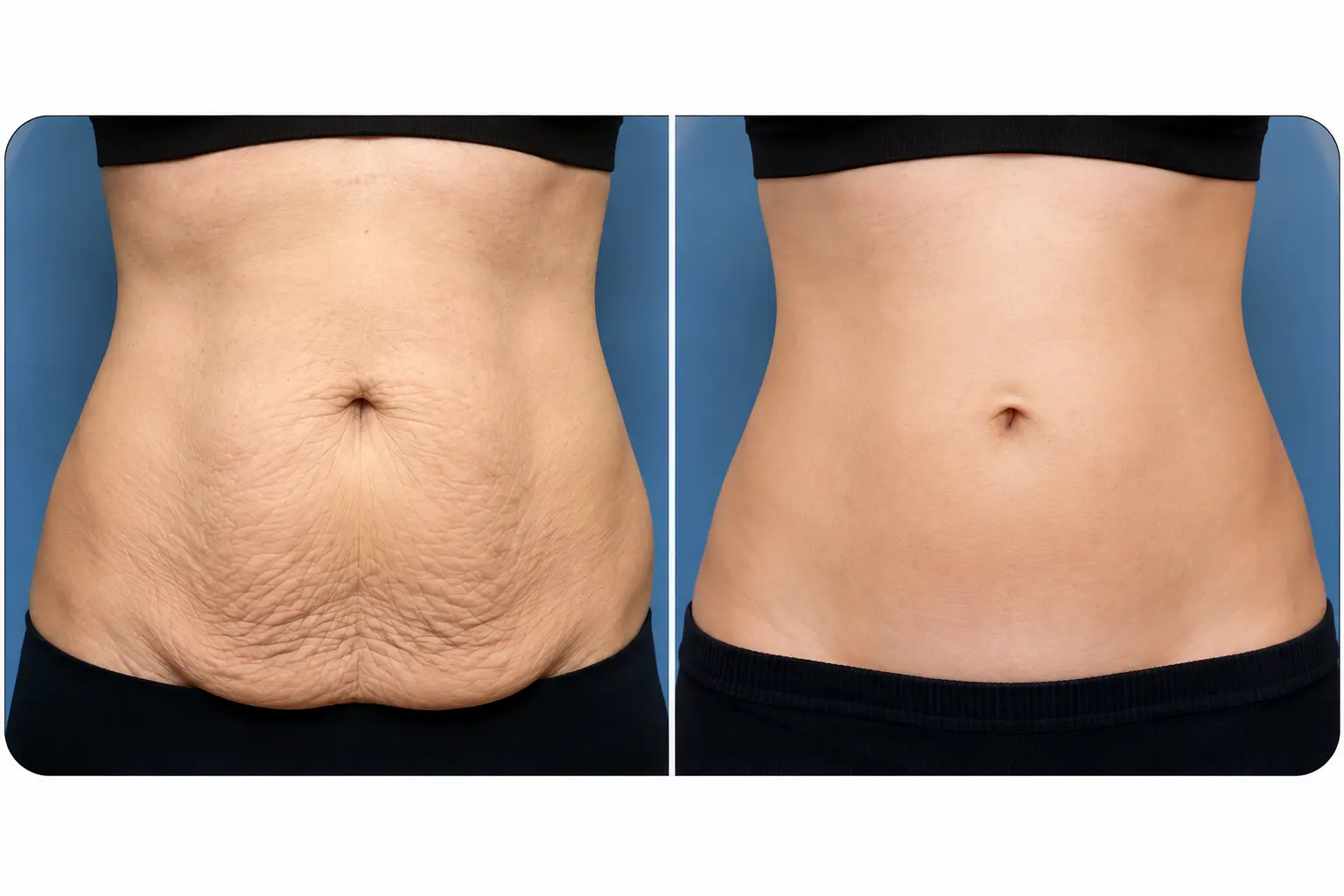
Tummy Tuck Surgery: What Every Patient Should Know Before Booking a Consultation
She was in her clinic gown, sitting across from me, and she said something I hear almost every week: "I've done everything right — I lost the weight, I exercise, I eat well — but this loose skin around my stomach just won't go." She wasn't looking for a miracle. She just wanted to understand her options, honestly, from someone who would tell her the truth rather than sell her a procedure. That conversation is exactly why this article exists.
A tummy tuck — medically known as abdominoplasty — is one of the most requested procedures in my practice, and for good reason. Pregnancy, significant weight loss, ageing, and genetics can all leave behind loose abdominal skin and weakened muscle that no amount of dieting or core training can fully correct. Modern surgical techniques have made a tummy tuck safer, more predictable, and more accessible than it was even a decade ago. My goal in this guide is simple: to help you understand what a tummy tuck actually involves, who it helps, what recovery really looks like, and how to choose a surgeon you can trust — without pressure and without exaggeration.
Understanding the Need for a Tummy Tuck
Most patients who consider a tummy tuck have already tried the conventional route — diet, strength training, sometimes years of it. What they're usually dealing with isn't stubborn fat alone. It's a combination of loose, stretched skin that has lost its elasticity, and abdominal muscles (the rectus abdominis) that have separated, a condition called diastasis recti. This is extremely common after pregnancy, particularly with twins or multiple pregnancies, and it's also common after losing a large amount of weight.
Here's the part that's important to understand clinically: skin that has been overstretched for months or years loses its collagen and elastic fibres. It does not spring back the way skin does after a short-term change. Similarly, once the abdominal muscles have separated beyond a certain point, no amount of planking or Pilates will bring them back together — they need to be surgically repaired. This is precisely the gap a tummy tuck is designed to close.
You don't need to rush into anything. But if loose skin is affecting your posture, causing skin irritation or rashes in the folds, making certain clothing impossible to wear comfortably, or simply weighing on your confidence day after day, it is reasonable to have a proper consultation and understand your options rather than continuing to live with it indefinitely.
What Makes a Tummy Tuck Effective and Trusted?
Abdominoplasty has been performed and refined for decades, and it remains one of the most extensively documented procedures in plastic surgery literature. In simple terms, the surgery involves removing excess loose skin and fat from the lower abdomen, and — in most patients — repairing the separated abdominal muscles with internal sutures to restore a firmer, flatter core. Depending on your anatomy, the belly button may also be repositioned so it sits naturally on the newly contoured abdomen.
There isn't one single version of this surgery. Based on clinical evidence and years of surgical practice, techniques have evolved considerably:
- Traditional (full) abdominoplasty — addresses skin, fat, and muscle across the entire abdomen, typically through a low, horizontal incision that can be concealed under most clothing.
- Mini tummy tuck — for patients with looseness limited to the area below the navel, requiring a smaller incision and less extensive muscle work.
- Lipoabdominoplasty — combines liposuction with a tummy tuck to refine the waist and flanks alongside the abdominal correction, giving a more complete contour in a single surgery.
- Mommy makeover — for many women, abdominal skin and muscle laxity doesn't occur in isolation after childbirth; breast changes often accompany it. A mommy makeover combines a tummy tuck with breast surgery (lift, augmentation, or both) in one coordinated surgical plan, which many patients prefer over spacing out two separate recoveries.
None of these are "better" in absolute terms — the right approach depends entirely on your anatomy, your goals, and what your muscles and skin actually need, which is exactly what a proper clinical examination is for.
Why Patients Prefer to Research and Book a Tummy Tuck Consultation Online
Patients today, understandably, do their homework before ever stepping into a clinic. And that's a good thing. Being able to research a surgeon's qualifications, read genuine patient experiences, look at verified before-and-after galleries, and even have an initial teleconsultation before committing to an in-person visit has made the entire process far less intimidating.
Online booking also means you're no longer restricted to whichever surgeon happens to be nearest to you. You can compare credentials, ask for a second opinion from a specialist in another city, and take your time deciding — without ever feeling rushed by a receptionist or a walk-in queue. A considered decision, made with full information, almost always leads to a better experience and a better outcome.
Where to Find a Genuinely Qualified Tummy Tuck Surgeon
Not every source of information carries the same weight. When researching a tummy tuck surgeon, prioritise:
- The surgeon's own official website and clearly listed qualifications
- Hospitals or clinics with recognised accreditation (such as NABH in India)
- Verified health platforms with genuine, dated patient reviews
- The National Medical Commission (NMC) registry, to confirm the surgeon is a licensed, registered medical practitioner
- A referral from your family physician or gynaecologist, particularly if your case involves diastasis recti after childbirth
Prominence on social media is not the same as clinical credibility. A surgeon can have a large following and still lack the specific training required for abdominal wall reconstruction. Look past the marketing and check the medical qualifications underneath it.
How to Choose the Right Surgeon for Your Tummy Tuck
This is, honestly, the single most important decision in this entire process — more important than the exact technique, and more important than the price. A few things genuinely matter:
Formal qualifications
Look for a surgeon with an M.Ch (Master of Chirurgiae) in Plastic Surgery, or an equivalent DNB qualification, from a recognised institution — not simply an MBBS with a short cosmetic course added on. I trained in General Surgery (MS) before completing my M.Ch in Plastic Surgery at NIMS, Hyderabad, one of India's most rigorous plastic surgery training programmes, followed by an international aesthetic fellowship in Ghent, Belgium.
Volume of experience with this specific procedure
Ask directly how many abdominoplasty procedures the surgeon has performed. Clinical outcomes in body contouring surgery correlate strongly with volume and repetition — a surgeon who performs this procedure regularly will have refined judgement that a generalist simply won't have developed.
Hospital infrastructure and emergency backup
A tummy tuck is a significant surgery, and it should be performed in a facility with proper operation theatre standards, qualified anaesthesia support, and emergency backup — not a standalone cosmetic room with no hospital affiliation.
Communication style
Does the surgeon explain things clearly, answer your questions without rushing you, and give you a realistic picture — including of what surgery cannot do? That honesty, more than any marketing claim, is what you should be evaluating in your first consultation.
And to be direct about something patients often feel awkward asking: seeking a second opinion before a major surgery is not an insult to any doctor. A confident, experienced surgeon will welcome it. If a clinic discourages you from getting a second opinion, that itself is worth noticing.
Different Types of Tummy Tuck: Which Might Suit You?
Every patient's anatomy is different, which is exactly why a single consultation, not a generic package, should determine your plan.
- Mini tummy tuck may suit patients with good skin elasticity above the navel and looseness confined below it.
- Full (traditional) tummy tuck is typically recommended when there is looser skin across the entire abdomen and muscle separation extending above and below the navel — the pattern most common after pregnancy.
- Lipoabdominoplasty suits patients who also want the waist and flanks refined at the same time as the abdominal correction.
- Mommy makeover is often preferred by patients who have completed their families and are also looking to address breast changes from pregnancy and breastfeeding alongside abdominal concerns, in one recovery period rather than two.
It's worth noting clearly: a tummy tuck is an elective surgery, planned well in advance, and it is not appropriate during an active pregnancy plan — I generally advise patients to wait until they are certain they've completed childbearing, since a future pregnancy can undo the muscle repair.
When Should You Consider Booking a Tummy Tuck Consultation?
There's no single "right time," but certain signs suggest it's reasonable to have a proper conversation with a specialist:
- Loose abdominal skin persists more than 12 months after childbirth or major weight loss, despite a stable weight and consistent exercise
- Visible bulging or separation along the midline of your abdomen, especially when you engage your core
- Recurring skin irritation, rashes, or discomfort in the lower abdominal fold
- You've completed your family planning and your weight has been stable for several months
- Non-surgical measures — diet, targeted exercise, physiotherapy for diastasis recti — have plateaued
None of this needs to be urgent or alarming. It's simply about recognising when a structural issue has moved beyond what exercise and time alone can resolve, and when a conversation with a specialist would give you clarity.
What to Expect: Before, During, and After Your Tummy Tuck
Before surgery
Your first consultation involves a physical examination, a review of your medical history and any prior surgeries, and routine pre-operative blood work. We'll discuss your goals honestly, including whether a tummy tuck alone is appropriate or whether a combined approach — such as lipoabdominoplasty or a mommy makeover — would serve you better. You'll receive clear pre-operative instructions regarding medications, smoking cessation (which meaningfully affects healing), and fasting requirements.
During surgery
A tummy tuck is performed under general anaesthesia and typically takes between two and four hours, depending on the extent of correction needed. Excess skin is removed, the abdominal muscles are repaired with internal sutures if separated, and in most cases the incision is placed low enough to be hidden beneath underwear or swimwear. Most patients stay in hospital for one to two nights for monitoring.
Tummy tuck recovery, honestly explained
This is the part patients worry about most, so let's be specific. In the first week of tummy tuck recovery, expect swelling, some drainage tubes (removed within a few days), and the need for assistance with daily tasks — walking in a slightly bent position initially is completely normal and protects your muscle repair. Most patients need one to two weeks off work, longer for physically demanding jobs. Compression garments are worn for around six weeks to support healing and reduce swelling. Light walking is encouraged early to reduce clot risk, but bending, lifting, and core exercise are restricted for four to six weeks, sometimes longer. Full results, once residual swelling resolves and scars mature, are usually best appreciated around the six-month to one-year mark — patience during tummy tuck recovery genuinely pays off in the final result.
Risks and realistic outcomes
Like any major surgery, abdominoplasty carries risks, including infection, delayed wound healing, fluid collection (seroma), scarring, and, rarely, blood clots — which is why proper pre-operative screening and a properly equipped facility matter. In most cases, patients experience a flatter, firmer abdominal contour and improved core stability, but results vary based on individual healing, skin quality, and whether weight remains stable afterward. I will never promise a specific outcome or "perfect" result — what I can promise is an honest assessment of what surgery can realistically achieve for your particular anatomy.
Tips Before You Book a Tummy Tuck Consultation Online
- Verify the surgeon's registration with the state medical council or NMC
- Check that the hospital or facility carries proper accreditation
- Ask specifically how many abdominoplasty and mommy makeover procedures the surgeon has performed
- Bring your medical records, including details of prior pregnancies, surgeries, or significant weight changes
- Understand the full cost breakdown, including surgeon's fee, anaesthesia, hospital stay, and garments — and ask about EMI or financing options if needed
- Ask what post-operative support looks like — how many follow-ups are included, and who you contact if something feels wrong at 2 a.m.
- For a major surgery like this, consider getting a second opinion — it's a sign of due diligence, not distrust
Common Mistakes Patients Should Avoid
- Choosing a surgeon purely because of a discounted price
- Delaying a consultation for years while the concern quietly affects daily life
- Relying on unverified home remedies or fitness influencers for what is a structural, surgical problem
- Overlooking a surgeon's actual qualifications in favour of polished marketing
- Withholding details about medications, smoking, or previous surgeries during consultation
- Skipping follow-up visits once the initial swelling settles
- Choosing a facility without checking whether it has proper hospital backup for emergencies
Why Choosing an Experienced Specialist for Your Tummy Tuck Is a Sound Decision
I completed my M.Ch in Plastic Surgery at NIMS, Hyderabad, followed by an international aesthetic fellowship in Ghent, Belgium, training under recognised authorities in body contouring and minimal-scar technique. Over more than fifteen years of practice in Visakhapatnam, abdominoplasty and mommy makeover procedures have remained among the surgeries I perform most regularly, and I've had the privilege of seeing patients regain not just a flatter abdomen but genuine day-to-day comfort and confidence.
What I try to bring to every consultation is straightforward: an honest clinical opinion, a clear explanation of what your specific anatomy needs, and a transparent cost estimate before you decide anything. If your case would be better served by physiotherapy first, or if I think a mini tummy tuck would suit you better than a full one, I will tell you that directly — my responsibility is to your outcome, not to selling the most expensive option. You're welcome to review real patient journeys, including tummy tuck and mommy makeover transformations, on our YouTube channel, and to browse verified tummy tuck before and after results in our before & after gallery.
Conclusion
If loose abdominal skin or separated muscles have been affecting how you feel in your own body, you don't have to keep managing around it indefinitely, and you also don't need to rush into anything out of frustration. A tummy tuck is a well-established, thoroughly studied procedure that, for the right patient, can restore a firmer, flatter abdominal contour and real day-to-day comfort — but the right decision starts with an honest, unhurried consultation, not a hasty booking.
Take the time to verify a surgeon's qualifications, ask direct questions about experience, and don't hesitate to seek a second opinion for a decision this significant. When you're ready, a proper clinical evaluation — one that looks at your specific anatomy rather than offering a one-size-fits-all answer — is the most reliable next step toward deciding whether a tummy tuck is right for you.
This article is for informational purposes only and is not a substitute for professional medical advice. Please consult a qualified plastic surgeon for a diagnosis and treatment plan specific to your individual condition.
Frequently Asked Questions
Is a tummy tuck safe? What are the risks?
Abdominoplasty is a well-established procedure with a long safety record when performed by a qualified plastic surgeon in a properly equipped facility. As with any major surgery, risks include infection, delayed healing, fluid collection, scarring, and rare complications like blood clots. Your surgeon should discuss these honestly during your consultation, along with how your specific health history affects your individual risk.
How long is tummy tuck recovery?
Most patients need one to two weeks off work initially, with restrictions on lifting, bending, and core exercise continuing for four to six weeks. Compression garments are typically worn for around six weeks. Final results, once swelling fully resolves, are usually best judged around six months to a year after surgery.
How much does a tummy tuck cost?
Cost varies significantly based on the extent of correction needed — a mini tummy tuck costs less than a full abdominoplasty or a combined mommy makeover — as well as anaesthesia type, hospital stay, and facility. You'll receive an exact, itemised estimate only after a clinical examination, since pricing shouldn't be quoted sight unseen.
Does insurance cover a tummy tuck?
Generally, insurers classify abdominoplasty as a cosmetic procedure and exclude it from coverage. In some cases, coverage may be possible when there is documented medical necessity, such as a hernia repair performed alongside the muscle correction. Review your specific policy and speak with your insurer directly.
Is a tummy tuck painful?
The procedure itself is done under general anaesthesia, so you feel nothing during surgery. Post-operative discomfort in the first several days is managed with prescribed pain medication and is generally described by patients as manageable soreness and tightness rather than severe pain.
How do I choose the right surgeon for a tummy tuck?
Look for formal plastic surgery qualifications (M.Ch or DNB), a track record of performing abdominoplasty specifically and regularly, hospital affiliation with proper emergency infrastructure, and a communication style that leaves you feeling informed rather than rushed. Genuine, verifiable patient reviews and before-and-after results matter more than social media following alone.
Can I get a second opinion online before deciding?
Yes. Many practices, including ours, offer an initial teleconsultation so you can discuss your case, ask questions, and get a preliminary opinion before committing to an in-person visit. For a decision as significant as a tummy tuck, a second opinion is a reasonable and sensible step, not something to feel awkward about.
How soon should I book a consultation if I have loose skin or muscle separation after pregnancy?
There's no strict deadline, but it's generally sensible to wait until your weight has been stable for several months and you've completed your family planning before pursuing surgery, since a future pregnancy can affect the repair. Once you've reached that point, booking a consultation simply gives you clarity on your options — it doesn't commit you to anything.
Ready to discuss your options?
📞 Call: +91 98516 51234
💬 WhatsApp: Message us directly
📅 Book a Consultation
All consultations are private and judgement-free.