Keloid Treatment
Why Choose Dr. Bhavya Sree for Keloid Treatment?
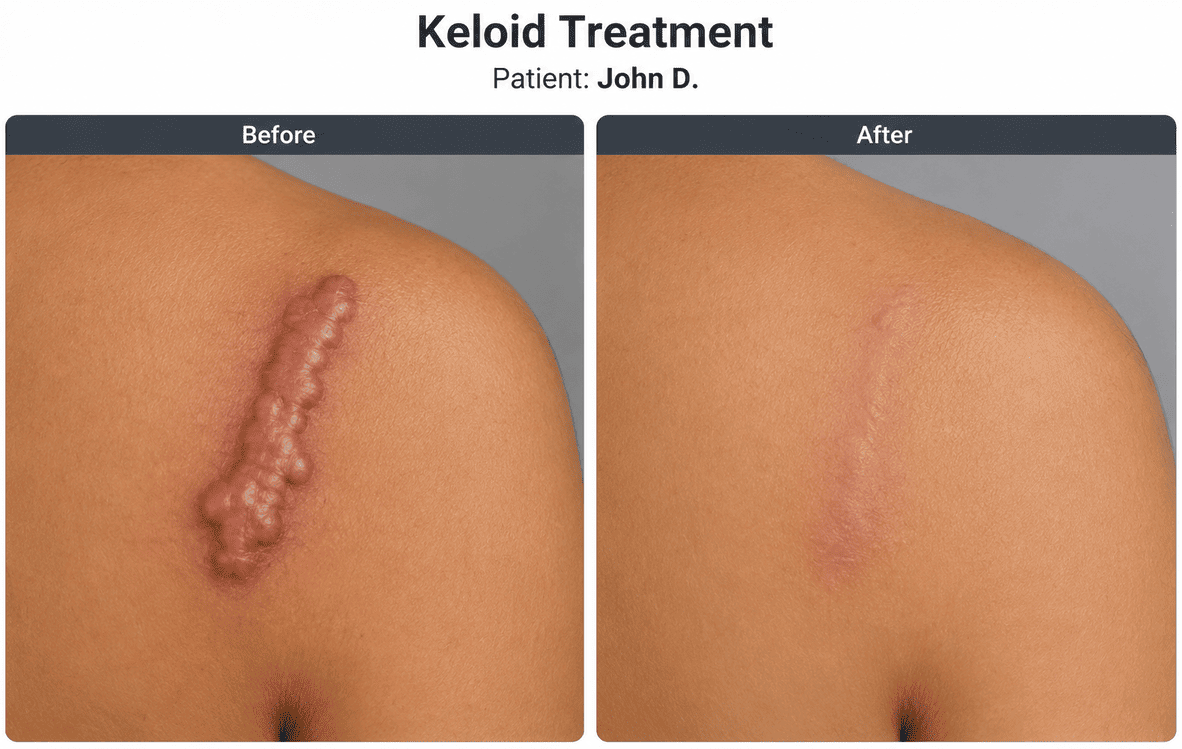
Control the scar that grew beyond the wound. Keloids are an overgrowth of scar tissue that extends beyond the original wound boundary -- sometimes growing significantly larger than the original injury. Unlike hypertrophic scars, keloids do not self-resolve; they continue to grow. They are more common in individuals with darker skin tones and have a strong genetic predisposition. Common sites include the earlobes, chest, shoulders, upper back, and jawline. Keloids can be itchy, tender, firm, and disfiguring -- causing both physical discomfort and significant psychological distress. Treating keloids requires a multi-modal approach; no single treatment is universally effective, and combination therapy offers the best outcomes.
Important: Keloids recur. The goal of treatment is significant reduction and long-term control -- not guaranteed permanent cure. Dr. Bhavya Sree will always discuss the realistic recurrence risk for your specific keloid before recommending treatment.
M.Ch Plastic Surgery -- NIMS Hyderabad (India's premier surgical training institution) FAM & FAS (Belgium) -- International fellowship-level training in aesthetic and reconstructive surgery All consultations, procedures, and injectables performed personally by Dr. Bhavya Sree -- never delegated Visakhapatnam's only plastic surgeon with dual international fellowship credentials in aesthetic surgery Natural-looking results -- surgical technique guided by an artist's eye for proportion and harmony
Treatment Options -- Used in Combination Treatment Role in Management
Intralesional Steroid First-line treatment. Triamcinolone injected directly at 4-6 week Injections intervals. Flattens, softens, reduces redness. Effective for smaller keloids. Surgical Excision Keloid surgically removed -- always combined with post-operative adjuvant therapy (radiation, steroids, silicone) to prevent regrowth. Excision alone has up to 80% recurrence rate. Post-Excision Radiotherapy Low-dose radiotherapy applied within 24-48 hours of surgery dramatically reduces keloid recurrence to as low as 10-15%. Pressure Therapy Sustained compression -- pressure earrings or custom garments. Most effective as adjuvant alongside other treatments. Silicone Gel / Sheets Applied continuously over the keloid or post-excision site. Reduces recurrence and softens existing keloid tissue for 6-12 months. Laser Therapy Pulsed dye laser (PDL) reduces redness. Fractional laser improves surface texture. Best as adjuvant -- not standalone. First Line Steroid injections -- 3-6 sessions, 4-6 weeks apart Surgical Cases Excision + radiotherapy + steroid injections post-op Recurrence Risk 10-80% depending on site, size, and treatment combination High-Risk Sites Earlobes, chest, shoulders, upper back, jawline Follow-Up Long-term -- 1-2 years of monitoring recommended
Frequently Asked Questions
Can a keloid be permanently removed? Keloids are notoriously challenging to permanently eliminate. With combination treatment (excision + radiotherapy + steroid injections + silicone), recurrence rates can be reduced to 10-20%, but no guarantee of permanent cure can be given. Dr. Bhavya Sree is transparent about this from the first consultation.
I had a keloid removed before and it came back. Can it be treated again? Yes -- recurrent keloids can be treated again, often with a different or more aggressive combination. Dr. Bhavya Sree will review your previous treatment history and design a revised plan accordingly.
Are keloids hereditary? Yes -- there is a strong genetic component. If close family members develop keloids, your risk is significantly higher. This information is factored into treatment planning and follow-up intensity.
Keloid treatment requires expertise and patience -- drbhavyaplasticsurgery.com
Ready to begin?
Speak directly with Dr. Bhavya Sree — every consultation is personal, confidential, and free of pressure.