
Skin Grafting
Why Choose Dr. Bhavya Sree for Skin Grafting?
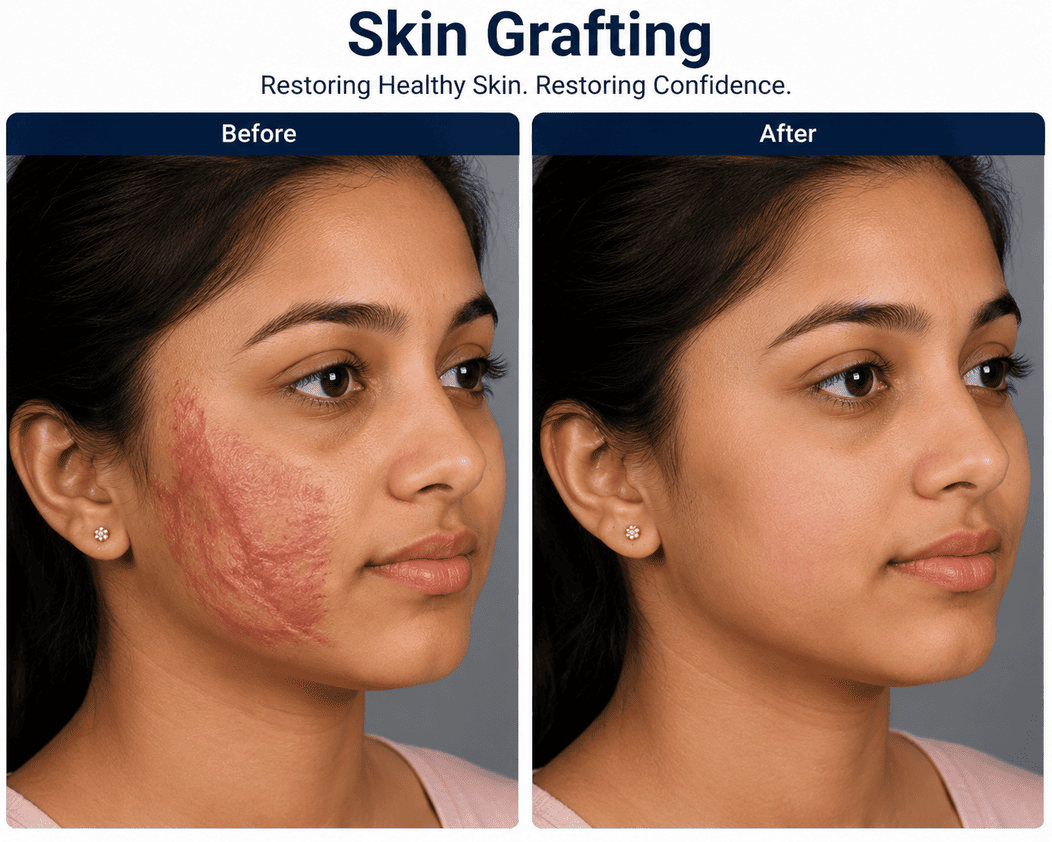
Restoring skin. Closing wounds. Rebuilding what injury has taken. A skin graft is the surgical transplantation of skin from one area of the body (the donor site) to cover a wound or defect where skin is missing or cannot heal on its own. It is a fundamental and highly effective reconstructive technique used to close burns, traumatic wounds, post-cancer excision defects, chronic ulcers, and areas where primary wound closure is not possible.
Skin grafting is not purely aesthetic -- it is often a limb-saving and life-restoring procedure. Closing a wound that cannot heal on its own prevents infection, reduces hospital stay, and restores function. Dr. Bhavya Sree approaches every graft with equal emphasis on functional and cosmetic outcome.
M.Ch Plastic Surgery -- NIMS Hyderabad (India's premier surgical training institution) FAM & FAS (Belgium) -- International fellowship-level training in aesthetic and reconstructive surgery All consultations, procedures, and injectables performed personally by Dr. Bhavya Sree -- never delegated Visakhapatnam's only plastic surgeon with dual international fellowship credentials in aesthetic surgery Natural-looking results -- surgical technique guided by an artist's eye for proportion and harmony
Types of Skin Graft Description
Graft Type Split-Thickness Skin Graft The most commonly used graft. Epidermis + partial dermis. Donor (STSG) site heals on its own. Used for large surface areas -- burns, traumatic wounds, chronic ulcers. Full-Thickness Skin Graft (FTSG) Entire epidermis and full dermis. Produces a much better colour match, texture, and durability. Used for smaller, aesthetically Composite Graft important defects -- face, hands, neck.
Skin plus underlying cartilage or fat -- used for specific reconstructive needs such as nasal tip or earlobe reconstruction. Common Indications for Skin Grafting Burns -- partial and full-thickness burns requiring wound closure Post-traumatic skin loss -- road traffic accidents, degloving injuries, animal bites Post-excision defects -- following removal of large skin cancers or tumours Chronic non-healing ulcers -- diabetic foot ulcers, venous leg ulcers Contracture release -- releasing tight burn contractures, with graft to fill the released defect
Anaesthesia General anaesthesia (most cases)
Duration 1-3 hours depending on defect size
Hospital Stay 3-7 days (graft monitoring critical)
Graft Take Assessed at Day 5-7 dressing change Donor Site Healing 2-3 weeks (STSG); primary closure (FTSG) Final Result 6-18 months -- grafts continue to mature and blend
Frequently Asked Questions
Will a skin graft leave a scar at the donor site? The STSG donor site (usually the thigh) heals like a superficial abrasion -- leaving a flat, slightly discoloured area that fades considerably over 12-18 months. FTSG donor sites are closed directly like a surgical wound, leaving a linear scar. Both are discussed and the donor site is chosen to minimise visible impact. Is skin grafting used for burns? Yes -- skin grafting is the definitive treatment for full-thickness burns and deep partial-thickness burns that will not heal on their own. Early grafting (within the first few days) reduces infection risk, shortens hospital stay, and produces better long-term scarring outcomes. Expertise in skin grafting makes the difference between a wound that closes well and one that doesn't -- drbhavyaplasticsurgery.com
Ready to begin?
Speak directly with Dr. Bhavya Sree — every consultation is personal, confidential, and free of pressure.