
Urethral Lengthening
Standing urination — one of the most meaningful functional goals of FTM surgery.
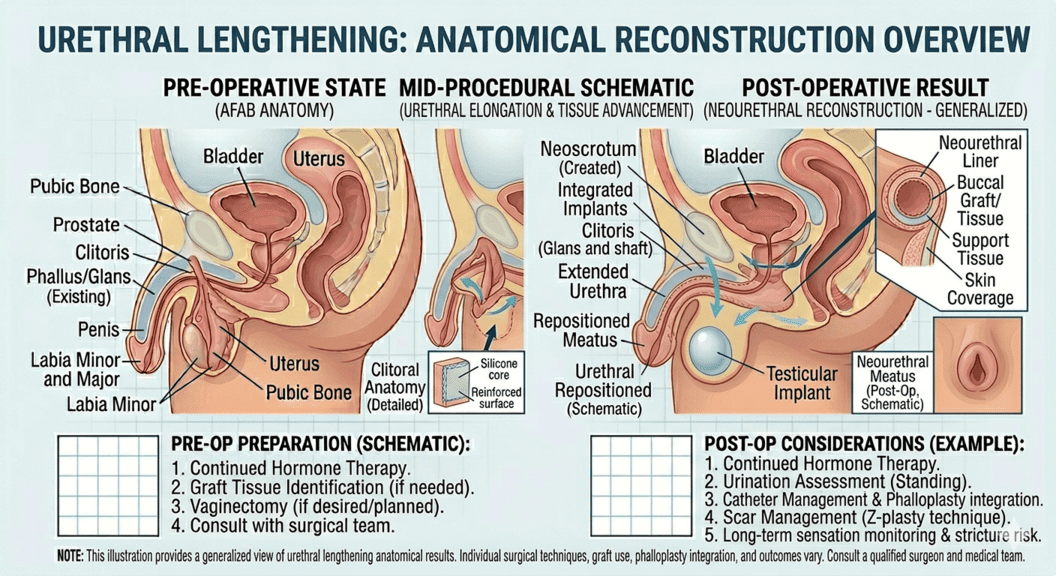
Urethral lengthening extends the native female urethra to the tip of the neo-phallus — allowing the patient to urinate from a standing position from the tip of their phallus, as males do naturally. It is one of the most commonly requested functional goals in FTM genital surgery, and is typically performed simultaneously with either metoidioplasty or phalloplasty.
The urethra is extended using a flap of vaginal mucosa (moist tissue from the vaginal lining) or a graft of buccal mucosa (tissue from the inside of the cheek) to create a tube that bridges the native urethra to the new urethral meatus at the tip of the neo-phallus.
⚕️ Urethral complications are the most common surgical challenge in FTM genital surgery. Urethral fistula (a small urine leak) occurs in approximately 15-40% of cases depending on the technique used. Most fistulas are minor and heal with a simple repair procedure. Stricture (narrowing of the urethra) occurs less commonly and may require dilation or minor revision. Dr. Bhavya Sree discusses these risks in full detail at consultation — they are manageable and should not deter patients from pursuing this goal.
Timing Performed simultaneously with metoidioplasty or phalloplasty Catheter Duration 2-3 weeks (metoidioplasty); 3-4 weeks (phalloplasty) Urethral Fistula Risk Approximately 15-40% — most treatable with minor revision Stricture Risk Less common — managed with dilation or minor revision Standing Urination Achievable in most patients once healed and any complications resolved
Frequently Asked Questions
Will I always be able to stand to urinate after urethral lengthening?
Most patients achieve consistent standing urination after urethral lengthening, once any complications (fistula or stricture) have been managed. A minority of patients require minor revision procedures before achieving reliable function. Dr. Bhavya Sree's honest assessment at consultation will help set realistic expectations for your individual anatomy.
What is a urethral fistula and is it serious?
A urethral fistula is a small opening in the urethral tube through which urine can leak — creating a second urinary stream. It is the most common complication of urethral construction and occurs in roughly 1 in 4-5 patients. Most fistulas are small and close with a minor surgical repair procedure. They are not dangerous, but they do require treatment.
What to Expect at Your Consultation
Your consultation with Dr. Bhavya Sree is a private, unhurried, and completely confidential conversation — with absolutely no obligation to proceed. You can expect: A thorough and respectful discussion of your goals, your medical history, and your timeline An honest explanation of what each procedure involves, what it achieves, and what it does not Clear information about the surgical process, recovery, and realistic outcomes A staged surgical plan if multiple procedures are being considered Discussion of any prerequisites — hormonal therapy, letters of support, or prior procedures A fully itemised, transparent cost estimate with no hidden fees No judgement. No pressure. No assumptions. Just an expert, compassionate conversation about your options.
Book your private consultation with Dr. Bhavya Sree — drbhavyaplasticsurgery.com | Visakhapatnam
Ready to begin?
Speak directly with Dr. Bhavya Sree — every consultation is personal, confidential, and free of pressure.